
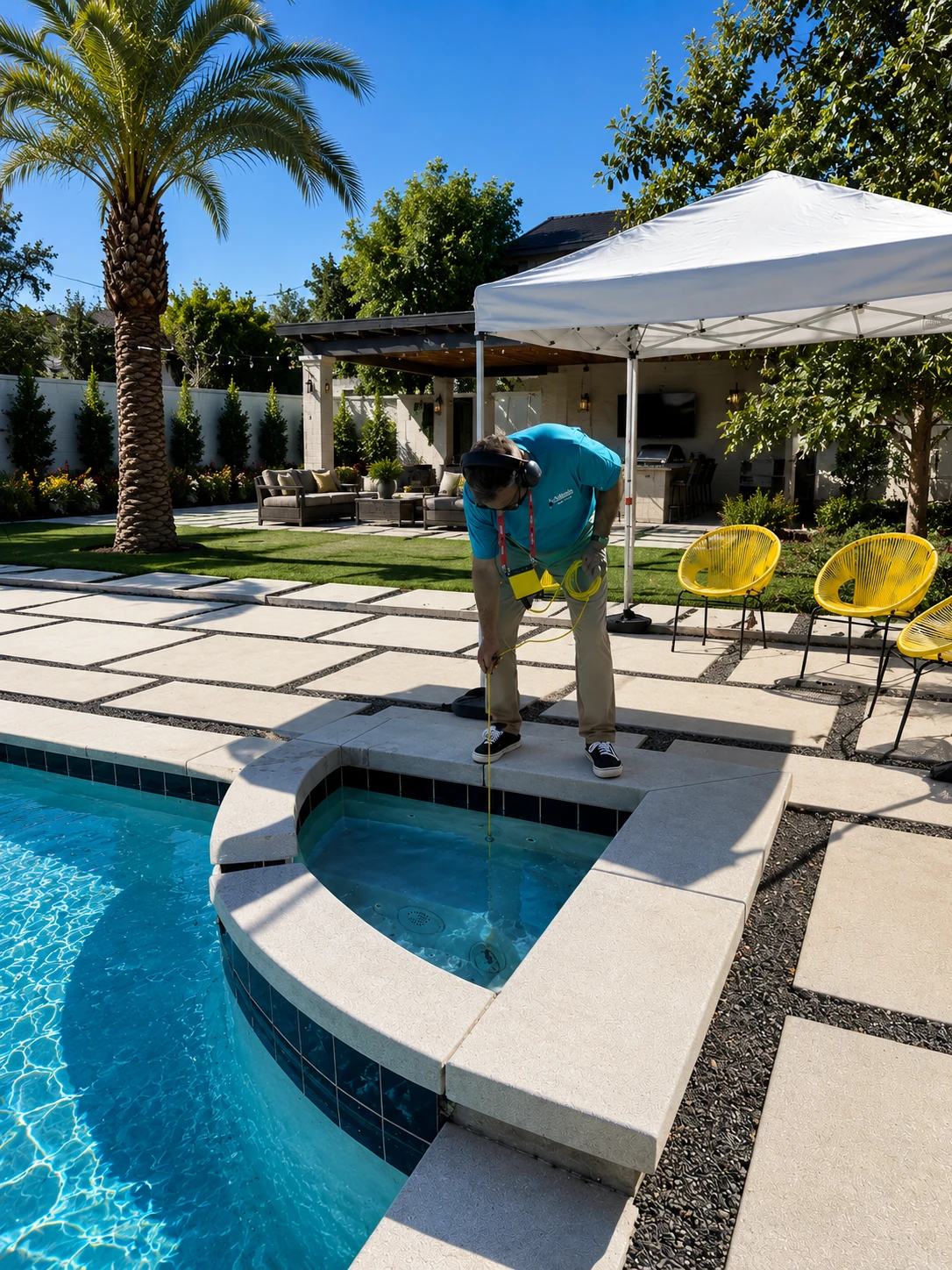
In Saint Augustine, homes range from 1700s coquina cottages to 1980s slab-on-grade ranches. Each one can hide a leak under concrete, behind walls, or below the floor. Twenty years ago, finding that leak meant breaking the slab with a jackhammer and hoping for the best. Today, modern leak detection lets us see through concrete without breaking a thing.
This guide walks through the tech we use, how it works, and why it matters for older Saint Augustine homes and commercial buildings alike.
Concrete hides it all. A slow pipe leak under a slab can run for months. Hidden water seeps into the soil. Mold growth starts behind walls and along the ceiling. By the time you spot a stain or feel a warm spot on the floor, the property damage is done.
Unchecked water loss leads to:
Property owners often live with slow leaks for years. The naked eye cannot see through concrete or drywall. Sharp home inspectors miss them too. That is where modern leak detectors come in.
Acoustic leak detection is the core of modern work. When water leaks from a pressure pipe, it makes sound. Even a tiny leak inside a wall makes a hiss our sensors can hear. We use special microphones and ground probes to listen for it.
How acoustic leak detection works:
This method works through concrete slabs, behind walls, and under tile. It is one of the best ways to detect leaks and locate leaks without digging.
Thermal cameras show heat differences as color. Hot water lines glow red on screen. Cool moisture spots glow blue. Our infrared cameras find leaks by identifying temperature anomalies. The naked eye cannot see these.
Where thermal imaging shines:
A thermal anomaly does not always mean a leak. We pair thermal cameras with acoustic checks to cut guesswork. This non-invasive approach is fast and clean.
Sometimes we need to confirm wet versus dry without cutting holes. Pinless moisture meters scan walls and ceilings using radio frequency. They show moisture levels through paint, drywall, and tile without leaving a mark.
Moisture meters help us:
This pinless tech means no holes in your drywall. It is a major step up from older probe meters that left pinpoint marks all over.
For lines we cannot fill with water, we use tracer gas leak detection. We close the line and then inject a small amount of safe inert gas. The gas escapes where the leak is. A sensor at the surface picks up the gas. It transmits the precise location of the leak to our handheld unit.
Tracer gas works best for:
It works fast and finds line leak spots that other methods miss. Other methods often require digging to test pipes section by section. Tracer gas does not.
Pressure testing is the first step on many calls. We cap off a section of pipe and watch the gauge. If pressure drops, there is a potential leak somewhere in that section. We narrow it down by closing smaller sections one at a time.
This helps us search for leaks within a defined zone. Once we know the area of the leak, we bring in acoustic, thermal, or tracer gas tools to pinpoint the exact spot. The leak detection equipment works together for pinpoint accuracy.
No single tool finds every leak. The best results come from layering methods. A modern water leak detection job at a Saint Augustine home might use four tools in one visit.
The data collected from each tool builds a complete picture. That is how we detect water leaks fast and avoid digging up your yard or floors.
Saint Augustine has a unique mix of homes:
All of them can leak. Old iron pipes corrode. New PEX can fail at fittings. Concrete slabs from the 70s often hide leaks within poured pipe channels. Coastal humidity hides moisture for even longer.
Watch for these signs of water leaking inside your home:
If you see any of these, it is time to call a water leak detection company.
We bring 40+ years of construction and leak work. Our crews know more than tools. We know how Saint Augustine homes are built. American Leak Detection helped make these methods famous nationwide. We apply the same toolkit with local crews and faster response. Our team knows historic plumbing, modern PEX, and slab construction in commercial buildings around here.
What sets us apart:
Finding the leak is only half the job. We also handle leak repair. From slab leak detection to pipe replacement, our crews can do both. That saves you from hiring a separate plumber. It also lets us guarantee our work end to end across St Johns County.
Our leak detection services cover:
Modern leak detection takes minutes, not hours. Our team brings the full leak detection equipment kit to every job. Don't wait for property damage and costly repairs to spread through your home.
Call Sawgrass Construction Solutions Leak Detection at (904) 815-1263 to schedule a leak detection visit. We serve Saint Augustine and all of Northeast Florida.
Need Leak Detection Help?
(904) 815-1263Our team is ready to diagnose and fix the issue. Call now or send us a message — we'll get back to you fast.
Contact UsSchedule a leak detection or call us for immediate assistance