
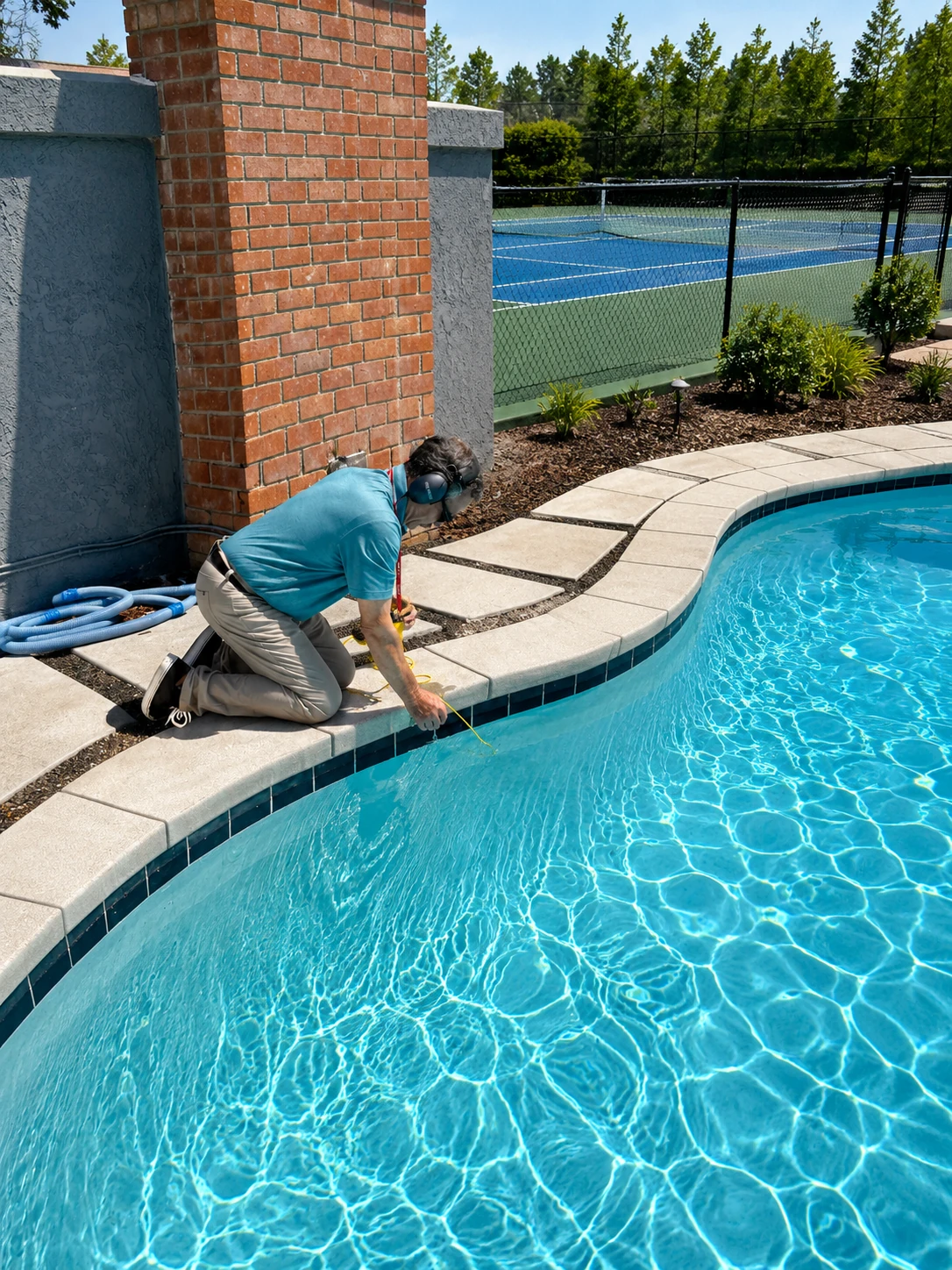
Buying a home with a pool in Ponte Vedra Beach should feel great. But your standard home inspection probably will not check the pool the way you think. Most home inspectors follow standards of practice. These standards limit pool work to a quick visual inspection. That leaves big gaps. If you are purchasing a home with a pool, knowing what your inspector skips can save you thousands.
This guide walks through what a home inspection covers, what it misses, and why a dedicated pool inspection matters before you close.
Most home inspectors follow the standards of practice from groups like InterNACHI or ASHI. These standards focus on the roof, structure, and HVAC system. They also cover plumbing and the electrical system inside the house. Swimming pools and spa systems are often listed as outside the inspection process.
When an inspector does look at the pool, it is usually a visual inspection only. They check that the pump runs, the water looks clear, and the deck has no large cracks. That is not a thorough inspection. Most inspection reports do not include pool plumbing pressure tests, equipment age checks, or full safety reviews.
Below are the five biggest gaps we see in Ponte Vedra Beach home sales.
A regular home inspector looks for visible leaks. They will not pressure test pool plumbing. So a slow leak under the deck or in a buried return line can stay hidden for years.
In coastal Northeast Florida, hidden leaks cause water damage to:
Signs of water loss may be small at first. You may see wet spots, soggy grass, or a higher water bill. By the time the leak shows on the surface, repair costs climb fast. A real pool inspection includes pressure testing of return lines and skimmer lines to find hidden leaks before you close on the home.
The home inspector might note that the pool pump and heater run fine. That tells you nothing about useful life. A 12-year-old pump near the end of its life will fail soon after closing. So will an older heater with worn parts.
A thorough pool equipment check covers:
If any part is near the end of useful life, your potential repair costs go up fast. A new heater alone can run $3,000. A full equipment pad swap can be $8,000 or more. These are real numbers we see every month in Ponte Vedra Beach.
This is where a standard inspection report often misses the most. Pool electrical work has strict safety standards. A regular home inspector checks that lights work. They also test that the GFCI receptacle near the equipment trips. They do not always check:
Older pools in the area often fail to meet current standards. A bad ground or wrong breaker can cause shocks in the water. This is a serious safety concern, not a cosmetic issue. A real pool inspection includes a full electrical system check.
A home inspector might glance at the tile around the pool and call it good. They are looking for big cracks. They will not tell you the shell is near its resurface date. They will not flag grout deterioration letting water reach the rebar.
We look closely at:
Some cosmetic issues are just looks. Others mean the shell is on its way out. Knowing the difference matters before you sign. A resurface job can cost $6,000 to $15,000 depending on the size of the pool and shell type. These checks show the true condition of the pool.
Florida pool safety code is strict. A home inspection covers basic items. It rarely checks all of them. We see homes for sale where the pool fence is missing a self-latching gate. The pool enclosure may have gaps. The handrail and ladder might be loose. These are real safety concerns, not just paperwork issues.
Other items often missed:
If any of these fail after you buy the home, the city can require fixes before giving a permit. That delays your move-in and adds cost.
Pools are part of life here. A home with a pool sits on the market when problems show up after closing. The home’s value, your peace of mind, and your potential repair costs all depend on what you knew before signing.
Our pool inspection picks up where the home inspector stops. We test what they skip. We use pressure tests, electronic listening, and dye to find leaks. We check pump amp draw, heater vent, valve operation, and electrical system grounding. We document every issue with photos.
You get a written report with:
Most pool inspections take 1.5 to 2.5 hours and are readily accessible to schedule before your final walk-through.
With 40+ years of construction and leak work, our crews know what to look for. We work on pools across St Johns County, Duval County, and Clay County. We have inspected hundreds of swimming pools for buyers, sellers, and property managers.
We serve Ponte Vedra Beach, Jacksonville, St. Augustine, Atlantic Beach, Jacksonville Beach, Neptune Beach, Fleming Island, Orange Park, Middleburg, Green Cove Springs, Fruit Cove, Palm Valley, Sawgrass, West Augustine, and World Golf Village.
Don't let a missed pool issue cost you after closing. Schedule a pool inspection before your home purchase closes. We work within tight inspection windows and send clear reports fast.
Call Sawgrass Construction Solutions Leak Detection at (904) 815-1263 to schedule your pool inspection. We serve Ponte Vedra Beach and all of Northeast Florida.
Need Leak Detection Help?
(904) 815-1263Our team is ready to diagnose and fix the issue. Call now or send us a message — we'll get back to you fast.
Contact UsSchedule a leak detection or call us for immediate assistance